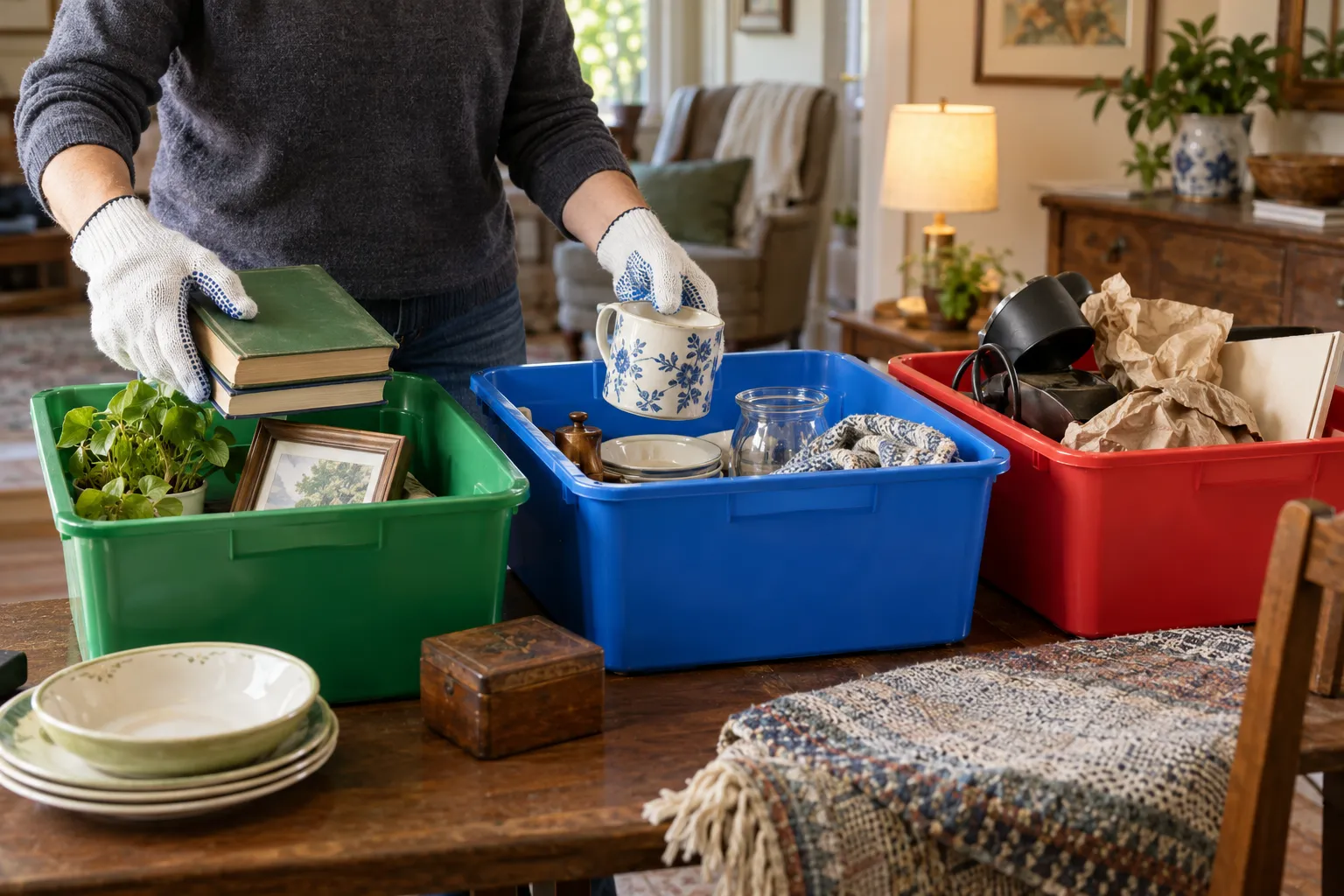
Start an estate cleanout with decisions, not lifting. Separate documents, keepsakes, donation candidates, sale items, and removal items before a crew moves anything.
Name one decision maker
Choose the person who can answer questions about uncertain items. If several relatives or representatives are involved, agree on a review process before the physical cleanout starts. This prevents an item from moving back and forth between rooms.
Use five clearly separated zones
- Keep: items already assigned to a person or property.
- Documents: financial records, identification, photographs, and legal papers for separate review.
- Donate: clean, usable items that match a recipient’s current acceptance policy.
- Sell or appraise: pieces that need a value decision before removal.
- Remove: approved non-hazardous material ready for hauling.
Room-closeout checklist
- Closets and drawers opened and reviewed
- Documents removed from the hauling zone
- Medications, chemicals, and batteries separated
- Keys and small valuables accounted for
- Removal items approved by the decision maker
- Path from room to exit cleared
Confirm donation acceptance before relying on it
Donation organizations set their own limits and may refuse mattresses, large appliances, damaged furniture, or items they cannot store. The SLO County Integrated Waste Management Authority maintains a donation-location directory, but acceptance can change. Call the recipient before staging a load around a donation assumption.
Source: SLO County IWMA donation locations, checked October 6, 2026.
Next step
Review the companion estate cleanout service, then call with the item list and access details when you are ready to discuss the job.